


Protein...the building block of life!
- Constantin Pezatos

- Jan 23, 2023
- 7 min read
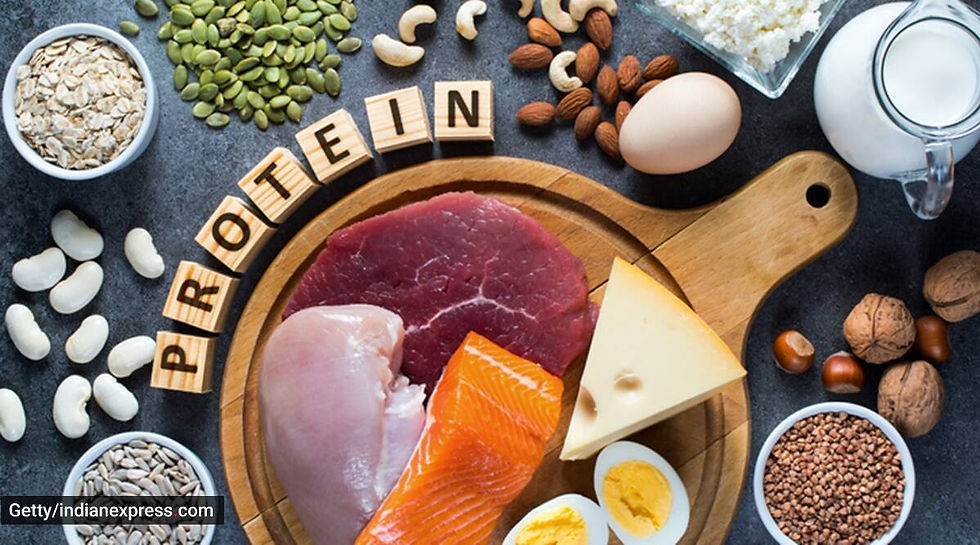
The name protein comes from the Greek verb "protevo" which means first in importance and primary. It indicates the exceptional and particular importance that proteins have for the health of the human body. Protein is one of the most basic macronutrients with essential roles in the human body's construction, development and maintenance. In essence, we are a combination of proteins.
Everything in nature is a creation of cells, and these cells have thousands of different proteins that make up each cell as a structure. In short, proteins are like tiny machines inside every cell that work to create every living organism.
The human body is made of 100 trillion cells, each with its own function. The functions of proteins in our body are many, different and essential. Apart from the structural components, their role acts as coenzymes in many metabolic processes for energy production and cell reproduction (DNA).
They are structures in our cells, connective tissues, skin and muscles. Another of their roles is the maintenance and replenishment of the already existing proteins that are in our body and have been worn out, the creation of new tissue and muscles and the defence of our body.
The building blocks of proteins are amino acids. Each amino acid composition can yield a different protein. The human body can synthesize a group of amino acids, which we call non-essential, but these are not enough to complete all the proteins the body needs, so it is forced to get the rest from external sources, which are no other than food.
These amino acids are called essential. So the whole of both groups is what provides the proper functioning of the organization.
In detail, we have a total of 27 amino acids, 19 of which our body can produce by itself, making them from various combinations, while the remaining eight must be taken daily from our food.
Amino acids are organic compounds that contain an amine radical and a carboxyl radical in their structure. Their main ingredient is nitrogen, which is essential for muscle growth and repair.
If the protein in food contains all the necessary amino acids, then this food is considered of high biological value. Foods of high biological value include foods of animal origin, meat, poultry, fish (seafood), egg, milk and cheese.
Foods of low biological value include foods of plant origin, such as cereals, rice, bread, potatoes, legumes and vegetables that usually lack the amino acids Lysine, Tryptophan, Methionine and Cystine. But making the right combinations can give us proteins of high biological value. Proteins that do not have all 21 amino acids are called incomplete, while protein sources that contain all 21 amino acids are called complete.
Amino acids are classified into three groups:
Essential amino acids:
These amino acids cannot be created by the body and must be obtained from food. They are as follows: Isoleucine, Leucine, Lysine, Methionine, Phenylalanine, Threonine, Tryptophan, Valine & Histidine, which are only necessary for babies.
Non-essential amino acids:
The amino acids the body can create by itself and does not get from any food are Alanine, Asparagine, Aspartic acids, and Glutamic acid.
Conditional amino acids:
Usually, they are unnecessary, except during periods of illness and high stress. Still, we can count them in non-essential amino acids: Arginine, Cysteine, Glutamine, Tyrosine, Glycine, Ornithine, Proline, and Serine.
This distinction of amino acids, which prevails only in theory, does not separate amino acids into essential and non-essential ones, so we should not consider the non-essential ones as useless. Unlike humans, plants can synthesize all the amino acids they need.
The process of breaking down proteins begins in the mouth by chewing food and combining salivary enzymes produced by the salivary glands.
It is then broken down in the stomach during digestion by enzymes known as proteases into smaller polypeptides to provide amino acids for the body to absorb. So imagine amino acids as building blocks, bricks the block and protein as a house. The body builds that house with those blocks... does that make sense?
The synthesis of amino acids
Amino acids can be combined and organized in millions of different ways to create millions of other proteins, each of them performing a specific function in the body, so they are organic molecules that are made of:
Carbon
Hydrogen
Oxygen
Nitrogen Sulphur, some of them!
Some of the main functions of protein in the body are to build, strengthen and repair or replace (as in tissues). Examples include:
Keratin strengthens protective coverings such as hair and nails.
Collagen and Elastin support connective tissue and build antibodies for our immune system.
They make hormones, which help cells send messages and coordinate body activities.
Muscle contractions such as Actin and Myosin are two types of proteins directly involved in muscle contraction and movement.
They make enzymes, which help facilitate biochemical reactions.
They carry elements such as Hemoglobin, a protein responsible for transporting oxygen and nutrients through the blood.
Mediates cell response: Rhodopsin is a protein in the eye that is used for vision.
Storage of elements such as Ferritin, the protein that stores iron in the liver.
Necessary processes in the body, such as balancing in water and fluids in general
When the body has sufficient amino acids, it is said to be in a positive nitric balance or otherwise in a growth or anabolism phase. In the opposite case, we have catabolism and the need to supplement the diet is deemed imperative.
Therefore, any problem in the complete body supply with amino acids will result in insufficient production of enzymes and amino acids by the body.
The body needs amino acids to build amino acids, essentially muscle proteins. Without the exogenous administration of amino acids (food or even supplements), the body will begin to break down muscle proteins to form the amino acids it needs for its most vital functions (enzymes, hormones, antibodies).
Amino acids must come from natural sources, be clean, pure, anti-allergenic and contain no impurities. Chemically/pharmaceutically synthesized amino acids are also safe, provided that they have not been enriched with various "exotic substances" and that they have the appropriate components such as:
Completeness
Correct proportions
Balanced composition, i.e. to contain all the essential amino acids (at least 30 mg of each amino acid) and no other substance, except for some B vitamin (usually B6 or niacin).
Excessive consumption of amino acids can cause severe toxic problems by raising ammonia levels in the muscles. Increased ammonia levels result in rapid fatigue. In athletes taking more than 50 grams of amino acids daily, significant side effects have been reported, many of which are reversible.
The additional use of BCAAs amino acids (leucine, isoleucine and valine) can cause an imbalance and insufficient utilization of the other amino acids.
Protein Supplements Guide
The types of whey protein
Whey protein
There are four types of whey protein:
Isolate (isolated, WPI) contains traces of fat, and a small amount of carbohydrate is less allergenic and is absorbed very quickly.
Concentrate (concentrated, WPC) has low percentages of fat and carbohydrates, is more allergenic, and has a lower absorption rate than isolate.
Hydrolysate (hydrolysate, WPH) is in a form that is more easily digested and is the least allergenic.
Blend (mixed, WPB) is a mixture of 2 or 3 types of protein.
Goat milk protein
Goat whey protein is an even more nutritious alternative to cow's whey, and it has the highest bioavailability of any protein on the planet. It comes from one of the purest animals, especially free-range animals, from which the milk has a very similar chemical structure and properties to human milk.
Goat's milk has a reputation as one of the best and highest-quality sources of nutrients with a worldwide reputation. If you are lactose intolerant, goat milk protein is best for you, and it is much easier to digest and one of the simplest ways to get extra protein in your diet.
Goat's milk protein ideally combines high nutritional value with low levels of fat and lactose and thus becomes effective as a nutritional supplement for a strong body.
Egg protein
It is made from egg whites. It is fat-free and very high in protein. It is considered a perfect source of protein because it is complete in the content of the chain of essential amino acids and glutamic acid. As soon as the protein comes into contact with the system, its absorption is complete by the body. When proteins are generally measured for their quality and effectiveness, egg protein is at the top of the list and is the standard for measurement. It is the same as the biological value of egg protein BV = 100.
Protein intake in vegetarians
As I mentioned above, vegetable proteins are characterized as having low biological value as they do not contain all the essential amino acids. That is, from the group of legumes, we see that the amino acid methionine is absent, while lysine and threonine are absent from the cereals group. By finding the right foods, we can create a complementarity of proteins and increase the meal's nutritional value, e.g. legumes with cereals or cereals with nuts.
On the other hand, if the combinations cannot be made in a conceptual meal, they can be consumed during the day as a snack or some other meal. If your lunch was lentils, the next meal could be fried rice with eggs, thus achieving even more protein complementation.
Tips
In the case of athletes who follow a high-intensity exercise at a high frequency (with 1-2 training sessions per day, 3-6 hours a day, 5-6 times a week) or for athletes who follow a high-intensity exercise at a moderate frequency (2- 3 hours a day, 5-6 times a week) the recommended daily protein intake is something that is decided by the specialist that the athlete works with, who based on the program will identify his needs.
For amateur athletes, protein intake can vary depending on each person's goal. For example, to improve body composition, i.e. reduce body fat and maintain muscle mass, your needs are likely to be more significant. The design of an individualized diet plan is the only way to cover energy, proteins and nutrients adequately.
Remember that more is not always better! Taking in more protein than recommended does not have additional benefits in recovery, muscle gain or performance. Until you can calculate your protein consumption needs, it is good to consult an expert who can explain in detail what you are asking for.


Comments