


Pre & Probiotics...the essence of healthy guts!
- Constantin Pezatos

- Jan 28, 2023
- 5 min read
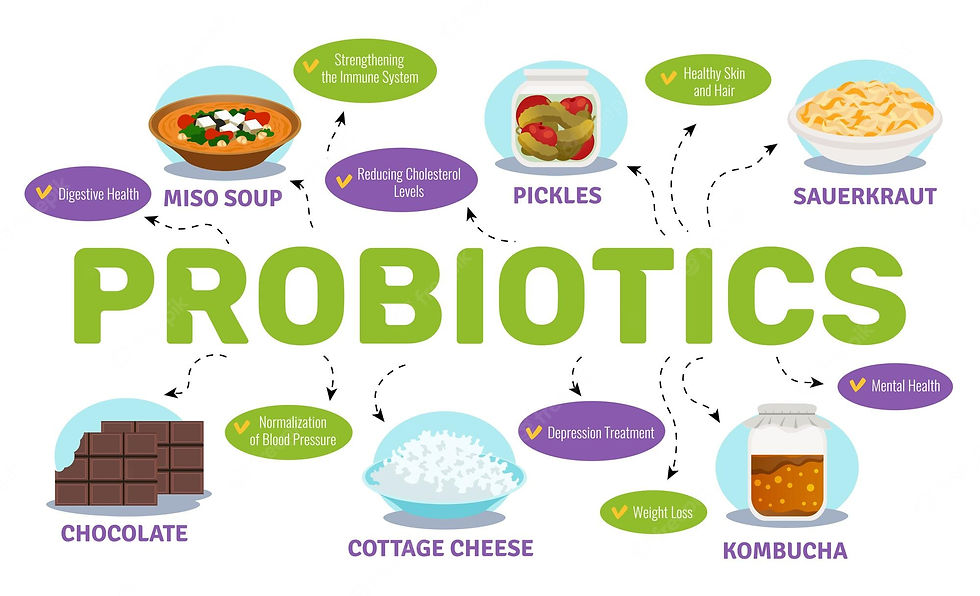
Probiotic means that which rejuvenates. Probiotics are defined as live microbial food components that have a beneficial effect on health by improving the gut's microbial balance, which is simply the consumption of some foods that have undergone some organic fermentation in their structure. These micro-organisms or otherwise living microbes or bacteria, which are non-pathogenic, are called probiotics.
They live in the digestive system, and their number reaches an incredible amount of 100 trillion. These micro-organisms survive during their passage through the gastrointestinal tract. As they are not affected by the acidic environment of the stomach or bile, they form part of the body's defence against diseases.
There are two main categories of probiotic micro-organisms, bacteria, which are:
The genus Bifidobacterium
The genus Lactobacillus
However, they also have many sub-species, which we will see in more detail below. These micro-organisms survive during their stay and passage through the gastrointestinal tract because they are not affected by the acidic environment of the stomach and bile. They are part of our body's defence and are beneficial for our health when consumed in sufficient quantities daily.
Probiotic micro-organisms can and do live in the human body without harming it. On the contrary, they help it by preventing the growth of many pathogenic microbes, which, when they find the opportunity, attack the body and infect the various organs of the body.
Probiotics contribute to a balance of gut flora that protects the body from infection. They also help break down proteins and fats in the digestive system, which is very useful for digestion and absorption of nutrients.
In order for a bacterium to be classified as a probiotic, it must be in live form and in quantities that are over 100 million microbes per gram of probiotic product, it must be alive when it is consumed, and it must have the following properties:
To exert a beneficial effect on the host*
To be non-pathogenic and non-toxic
To be contained in a large number
Be able to colonize and metabolize in the gut
To remain alive during storage and use
To have good organoleptic properties (e.g. to give a sweet taste).
* The host is a cell that provides the necessary nutrients and the appropriate living space to the guest, in this case, the bacterium.
How do probiotics work?
They improve the normal intestinal flora (the bacteria that live in the gut), preventing the growth of pathogenic bacteria, establishing harmful microorganisms, and favouring the development of good (non-pathogenic) bacteria.
The levels of less desirable bacteria and various harmful (coliforms, clostridia) bacteria are reduced due to their competition for nutritional elements and attachment points on the intestinal mucosa. In other words, the intestinal flora is an important part of the intestinal defence mechanism.
They also lower the gut's pH and compete with pathogenic microorganisms in the gastrointestinal tract, thus preventing the growth of "bad" bacteria by producing antimicrobial cultures.
Main types of probiotics
Lactobacillus plantarum
It produces lactic acid, which inhibits the growth of pathogenic microorganisms and protects against flatulence (gas).
Lactobacillus casei
Suitable in cases of intestinal infections, Crohn's disease, and allergic rhinitis. It strengthens the immune system.
Lactobacillus bifidus
It increases acidity and makes the environment inhospitable to pathogenic bacteria (such as e.coli). Suitable for antibiotic diarrhoea, rotavirus diarrhoea (the leading cause of severe diarrhoea among infants and young children) and treatment of irritable bowel syndrome
Lactobacillus acidophilus
Helps control colic and diarrhoea in infants. It strengthens the immune system and reduces the growth of candida fungus.
Lactobacillus bulgaricus
It contributes to treating both constipation and diarrhoea, affecting intestinal peristalsis.
Bacillus longum
It contributes to the removal of nitrites (they are cancerous substances).
How do they help the body?
Improving the functioning of the digestive system.
Alleviating the symptoms of irritable bowel syndrome (IBS) and stomach ulcers.
Improving lactose tolerance (lactose intolerance).
Addressing constipation.
Helping treat necrotizing enterocolitis (more common in infants).
Contributing positively to the treatment of Crohn's Disease & ulcerative colitis (inflammatory bowel diseases).
Preventing inflammation in the intestine, especially after surgery on it.
Contributing to the prevention of bowel cancer.
Strengthening the immune system.
Contributing to preventing and treating fungal infections of the female vagina, gynaecological infections (vaginitis, cervicitis) and urological infections (cystitis).
It helps with the side effects of antibiotic treatments.
Probiotics of food and nutritional supplements
The best source of probiotics is dairy products, especially unpasteurized (traditional sheep yoghurt with skin).
For safety reasons, however, dairy products are made from pasteurized milk, which is why probiotics are added afterwards. They are still present in foods, such as kefir (higher content when prepared at home, with live bacteria and milk).
Supplements have higher concentrations of probiotics and various probiotics that serve different needs and are delivered directly to the gut.
Particular attention must be paid to the dosage, the reason we take them and to be as resistant as possible to the stomach's acidic environment.
Prebiotics
"a prebiotic is a partially fermented ingredient that allows certain changes in the composition and activity of the gastrointestinal microflora that confers a benefit on the well-being and health of the organism."
Simply put, prebiotics is various food components (mainly fibre) not digested by the enzymes of the human digestive system and promote the growth of beneficial bacteria in the gut.
However, reaching the large intestine, they are digested by the bacteria that colonize it, thus stimulating their growth and increasing their activity. In other words, they constitute the "food" so that the probiotic strains grow more, and the benefits are the improvement of the health and good functioning of the intestine, more specifically:
They are non-digestible food components (mainly carbohydrates)
Stimulate the growth or activity of one or a limited number of bacteria (colon)
They modify the microflora of the colon
They have a beneficial effect on the host
Stimulate proliferation and growth of beneficial non-pathogenic bacteria (Lactobacillus, Bifidobacterium)
They also strengthen the protective "wall" of the intestine to prevent the passage of pathogenic micro-organisms, which can cause unwanted effects (e.g. diarrhoea), prevent or slow down the growth of intestinal tumours.
Their main difference with probiotics is that prebiotics do not contain the micro-organisms themselves but the necessary components for the excellent functioning of the micro-organisms. They have similar actions to probiotics, however not to the same extent and with the same immediacy. And this is because prebiotics acts indirectly, essentially strengthening probiotics.
So far, only two fructo-oligosaccharides fully fit the definition of prebiotics:
Oligofructose
The inulin
Oligofructose and inulin, in addition to not being absorbed by the small intestine and going to the large intestine intact, also have the property of not raising blood glucose levels or stimulating insulin production. The best-known prebiotic dairy products are yoghurts and liquid sour milks.
Foods rich in prebiotics
Garlic
Artichokes
The peel of apples
Onions, leeks and celery
Legumes
Dandelion root
Rye, barley and oats
In addition to probiotics, there are also products on the market that contain prebiotic ingredients (prebiotics). A probiotic and a prebiotic together are called symbiotics.
What are symbiotics?
Symbiotics are a combination of probiotics and prebiotics. Probiotics are live microorganisms, or as they are called, friendly bacteria, which, when consumed in sufficient quantity, can contribute to the better health of the host (host cell), in our case here, the human who consumes them.
Side effects
Since commercial oligosaccharides increase carbohydrate fermentation, they also increase gas formation. This means that the main side effects are swelling, bloating, and gas in the gut. The side effects depend on the type of oligosaccharide and each individual's tolerance.
Conclusion
Probiotics and prebiotics are "keys" to good gut health. We create a healthier body by incorporating health-promoting functional foods into our diet, such as foods containing probiotics and prebiotics.


Comments